
High-Performance Cosmetic Formulations: Understanding the Differences Between White Clay and Kaolin
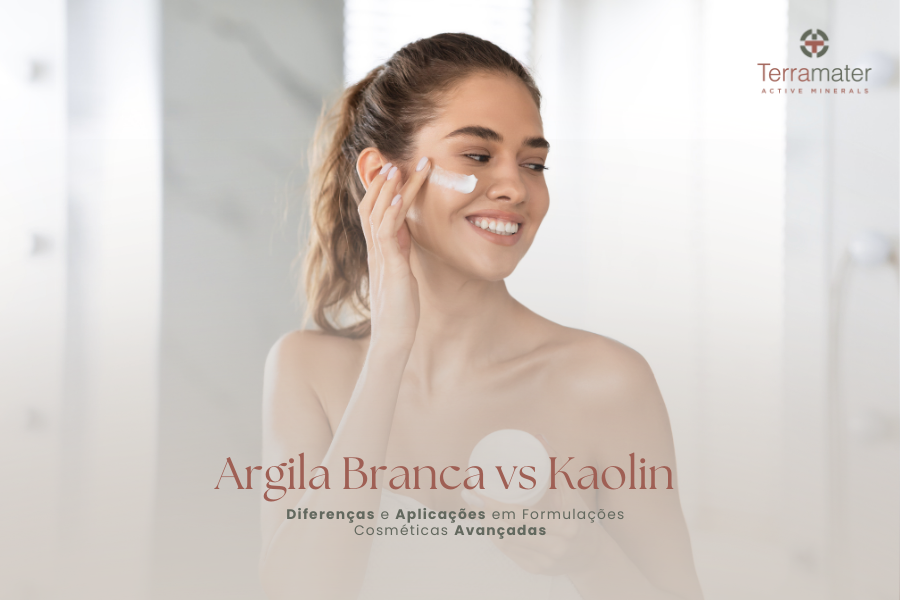
High-Performance Cosmetic Formulations: Understanding the Differences Between White Clay and Kaolin
In the development of high-performance cosmetic formulations, the choice of natural ingredients is crucial. Although the terms “white clay” and “kaolin” are often used interchangeably, their specific characteristics and properties differ significantly. Understanding these distinctions is essential for optimizing the performance of skincare and
1. Characteristics of White Clay
White clay is the natural form of kaolinite, extracted directly from mineral deposits. Rich in silicon and aluminum, it has a pH close to that of the skin and may contain additional minerals depending on its origin. Its main
- Brightening and tone-evening effect: Helps reduce da
- Soothing effect: Calms irritation and redness, making it ideal for sensitive and reactive skin.
- Hydration and remineralization: Maintains balance without drying out the skin, making it perfect for creams and hydrating masks.
- Cell regeneration: Promotes healing and improves texture, often used in post-procedure treatments.
2. Characteristics of Kaolin
Kaolin is the processed and purified version of white clay, with a finer particle size, lower mineral impurities, and a slightly acidic pH. This refinement provides specific advantages, such as:
- Mattifying effect and oil absorption: Ideal for products that control shine, especially for oily skin.
- Ultrafine texture and dry touch: Offers a lightweight feel, widely used in facial powders, makeup, and mild soaps.
- High stability in formulations: Due to its purity, it has superior compatibility with other active ingredients and minimal pH variation.
- Low irritant potential: The refining process reduces risks for sensitive skin, making it ideal for clean beauty formulations.
3. Cosmetic R&D: Opportunities for Innovative Products
The difference between kaolin and white clay allows for the development of unique and innovative formulations:
- Personalized facial masks: Blends of kaolin and white clay can be adjusted to balance oil absorption and hydration.
- Hypoallergenic products: Refined kaolin is ideal for clean beauty formulations due to its purity and low reactivity.
- Multifunctional cosmetics: White clay provides detoxifying action, while kaolin enhances soothing and brightening effects.
- Mineral powders and foundations: Kaolin improves adherence and reduces oiliness, making it essential for non-comedogenic makeup.
- Premium skincare products: Ultrafine kaolin in serums and creams delivers a soft-focus effect and velvety touch.
By strategically combining these clays, formulators can develop innovative cosmetics with exclusive benefits, such as microbiota balance, anti-pollution action, and a brightening effect.
Conclusion
A detailed understanding of the distinct characteristics of white clay and kaolin provides Research & Development (R&D) professionals with a solid foundation for creating innovative cosmetic formulations. Choosing white clay allows for the exploration of its hydrating and soothing properties, ideal for sensitive skin treatments, cell regeneration, and tone-evening. Meanwhile, kaolin, with its refined purity, is perfect for products focused on oil control, mattifying effects, and stability, making it suitable for oily skin and compatible with various active ingredients. By strategically integrating these two clay variants, formulators can develop advanced solutions that not only meet different skincare needs but also enhance sensory experiences and product longevity, aligning innovation with effectiveness.
I want to know more
Share